

A winter morning in Cape Town has a charm all its own, and few places capture it quite like the Cape Winelands. When the mist settles over the mountains and the vineyards turn a deeper shade of green, the region's wine farms transform into some of the most inviting indoor spaces around. From candlelit cellars to converted fermentation tanks turned tasting caves, these venues have been designed with exactly this kind of weather in mind: warm lighting, rich textures, and a slower pace that suits a grey sky perfectly.
In this blog we cover…
- Klein Roosboom: Eight individually themed tasting caves built from old concrete fermentation tanks, each with its own character and seating style.
- Maastricht Wines: A family-run Durbanville estate with a rustic European tasting room warmed by table lamps and a statement chandelier.
- Buitenverwachting: A 250-year-old thatched wine cellar in Constantia, furnished with leather couches and views towards the mountains.
- Kanu Wines: An underground barrel cellar in the Bottelary Hills with six new themed booths and a fireside couch corner.
- Delheim Wine Estate: The historic "Downstairs" cellar door in Stellenbosch, known for its vintage feel and signature wine and cupcake pairing.
- Uva Mira Mountain Vineyards: A high altitude Helderberg tasting room centred around a dual sided fireplace and panoramic mountain views.
- Ernie Els Wines: A modern farmhouse-style tasting room with vaulted timber ceilings and a complimentary welcome pour.
Klein Roosboom: Tasting Caves Carved from Wine Making History
Set in the Durbanville Wine Valley, around 20 kilometres from central Cape Town, Klein Roosboom Family Winery brings together family heritage, sustainable farming, and a wine tasting experience unlike most others in the region.
What sets Klein Roosboom apart on a winter morning is its collection of eight tasting caves, each converted from concrete fermentation tanks once used in the winery's production. Every cave has its own theme and atmosphere:
- Bubbliotique and Hang Gat caves suit smaller groups of one to four people. Bubbliotique is furnished with soft cushioned seating, while Hang Gat features two swings suspended from the ceiling for sipping wine in playful comfort.
- Ou Gat and Rouge caves comfortably seat one to six guests. Ou Gat has a quaint, antique feel, while Rouge leans into a French bohemian mood.
- Versailles, The Kitchen, and The Pantry are the largest caves, seating up to eight visitors. Versailles is decorated with a jumble of mirrors and picture frames that turn the walls into art, while The Kitchen and The Pantry are styled as a 19th-century farmstead, complete with rustic furnishings.
Multi-award-winning red and white wines are poured throughout, with knowledgeable staff on hand to share the stories behind the vines and the winery itself. The snug, below-ground feeling setting makes the caves a natural retreat when the weather outside is less than inviting.
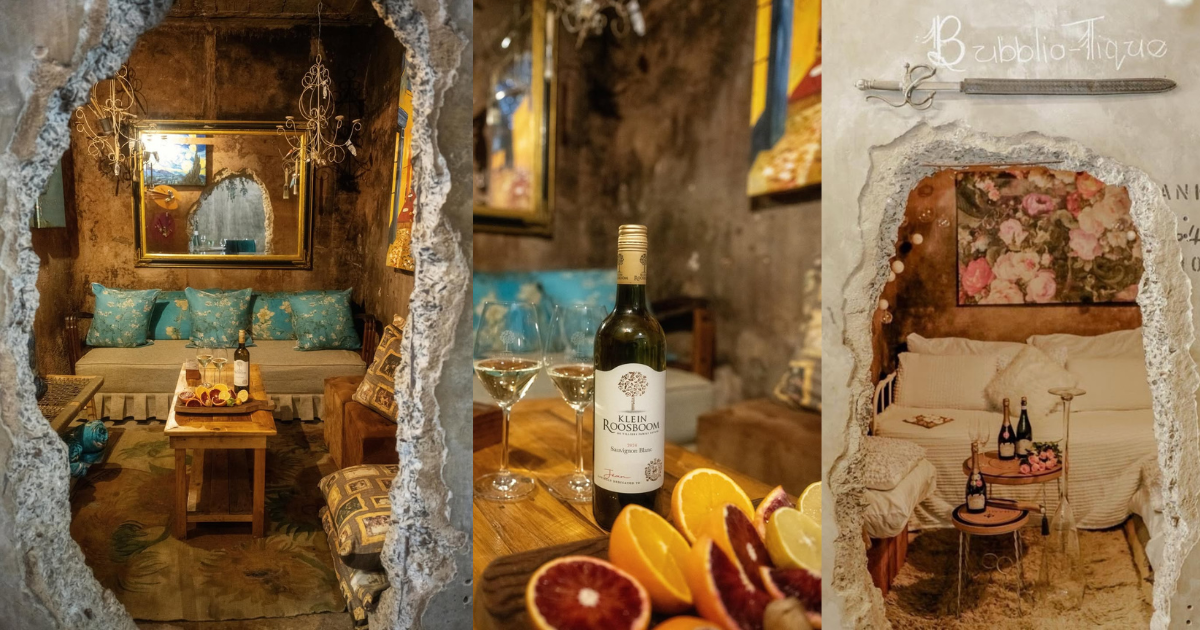 Images: @kleinroosboom on Instagram
Maastricht Wines: A Rustic European Welcome in Durbanville
Also located in the Durbanville wine valley, Maastricht is a family-owned estate that has been cultivated by the Louw family for 35 years. The farm sits among rolling hills with views stretching towards Cape Town and the Atlantic seaboard, making it a scenic stop even before the tasting begins.
The estate's newly renovated tasting room is designed in a Rustic European Chic style that suits a cold, wet morning particularly well. Layered vintage Persian-style rugs anchor each seating area, adding warmth underfoot and softening the acoustics of the polished concrete floors, while small shaded table lamps cast pools of low, warm light that make the high-ceilinged room feel intimate rather than cavernous. At the back, a multi-tiered brass chandelier adds a touch of old-world formality, the kind of detail that turns a tasting into an occasion.
Tastings run through five wines, from merlot to sauvignon blanc, paired with seasonal cheese platters and traditional Dutch bitterballen. Visitors may well find themselves chatting with one of the owners, who are often on site and happy to talk through the estate's history.
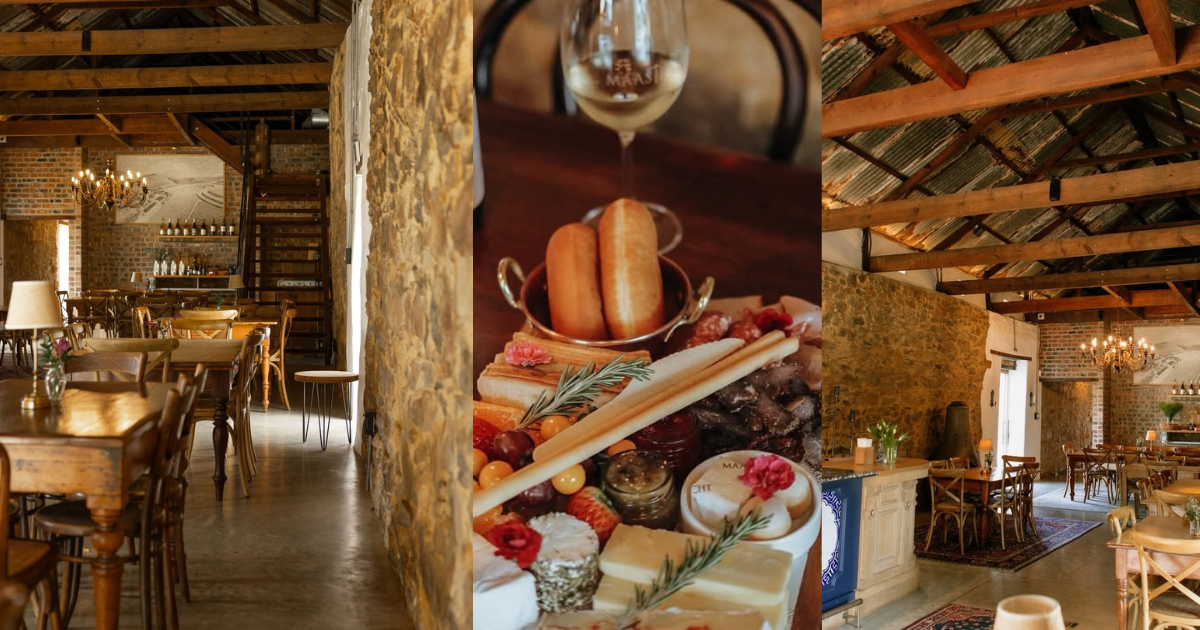 Images:@maastrichtwines on Instagram
Buitenverwachting: A Historic Cellar in Constantia
Buitenverwachting's wine tasting experience takes place in a 250 year old wine cellar, complete with a traditional thatched roof, white-washed walls, and rare yellow wood ceilings. The interior favours a relaxed, casual atmosphere, with leather couches and small lounge areas built around a central tasting bar.
The building's stone tiled terrace looks out over manicured lawns and a striking 250 year old Norfolk Pine, while a separate lounge terrace connects directly to the vineyards with views towards the Constantia mountains. On a chilly morning, the appeal lies indoors, in a Rustic Modern interior. A neat row of low hanging, cone shaped pendant lights grounds the bar in soft, focused light, while the dining chairs, with their dark wood frames and pale chartreuse upholstery, bring a Mid Century Modern touch to the room. A cognac leather sofa adds rich texture that only improves with age, and backlit wood shelving displaying potted orchids softens the transition between stone and timber, the kind of small, considered detail that makes the space feel lived in rather than staged.
Tastings are guided by the estate's tasting room staff and can be paired with casual charcuterie platters, fresh baguettes, and artisan ale, making for a relaxed, unhurried morning regardless of the weather.
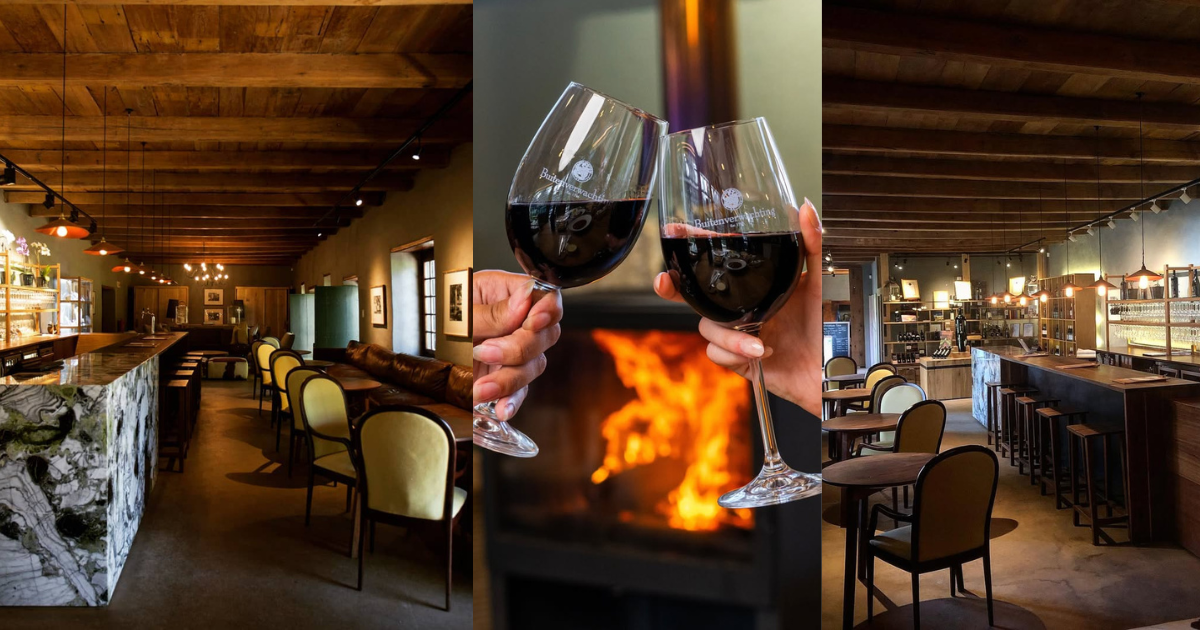 Images:@buitenverwachtingwinetasting on Instagram
Kanu Wines: Underground Booths in the Bottelary Hills
Kanu Wines sits against the gentle slopes of the Bottelary Hills, overlooking the Simonsberg mountains. Beyond wine tasting, the estate also offers bass fishing, putt putt, and a wine and sushi pairing, though it is the underground barrel cellar that holds particular appeal when the skies open up.
The cellar has recently been fitted with six fully furnished, intimate booths, each named after one of Kanu's favourite cultivars: Chenin Blanc, Merlot, Shiraz, Cabernet Sauvignon, Pinotage, and a nod to the estate's Méthode Cap Classique. Each booth has its own décor and lighting, designed to feel like a small, castle like haven, and guests receive personalised facts about the grape they are tasting and its place in South African wine heritage.
A typical visit begins upstairs in the light filled tasting room before descending to the cellar booths for a more intimate finish. For colder mornings, the relaxed couch corner beside the fire upstairs is a popular spot to settle in, particularly once winter weather sets in.
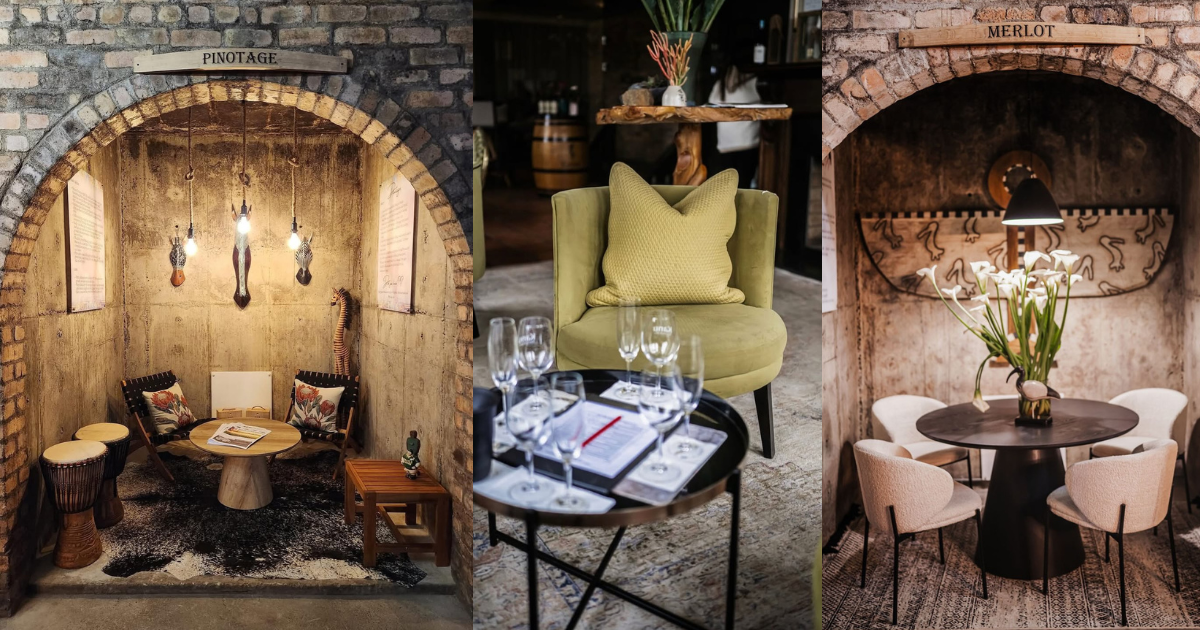 Images: @kanuwines on Instagram
Delheim Wine Estate: The Birthplace of the Stellenbosch Wine Route
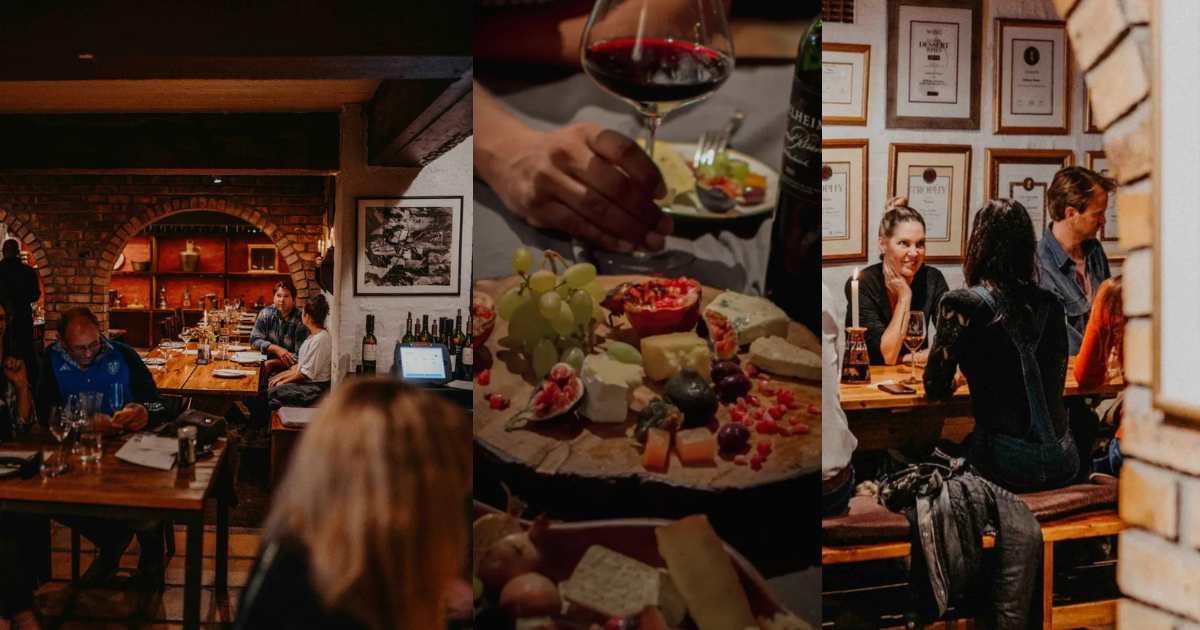
Delheim's "Downstairs" cellar door is one of the most historically significant tasting rooms in the Cape, having played a part in the founding of the Stellenbosch Wine Route in 1971. Little has changed in the space since then, including its well known cobwebbed window, and the estate continues to treat hospitality as central to the visitor experience.
The cellar has long been known for pairing bespoke cupcakes with its wines, and this has recently been refreshed with a range of fynbos inspired cupcakes that nod to the Cape Floral Kingdom and the estate's eco friendly winemaking. The setting itself follows a Rustic Old World Wine Cellar style, built for sitting down with a glass of red and staying a while. A vintage, hand-cranked wine press stands as a sculptural centrepiece celebrating the estate's winemaking heritage, surrounded by simple, sturdy wooden tasting tables and chairs that favour function over polish. Warm terracotta floor tiles add to the time-worn, earthy feel underfoot, while low, focused spotlights pick out the bottles and artwork and leave the corners of the room pleasantly moody.
It is a subterranean, antique feeling space that suits a slow, contemplative tasting on a cold morning.
 Images: @delheimwines on Instagram
Uva Mira Mountain Vineyards: Mountain Views and a Fireside Welcome
Situated as high as 620 metres above sea level on the slopes of the Helderberg, Uva Mira Mountain Vineyards borders the Helderberg Nature Reserve and looks out over both False Bay and Table Bay. The high altitude, granite soils, and cool sea breezes all contribute to the estate's distinctive cool climate wines, from Chardonnay and Sauvignon Blanc through to Cabernet Sauvignon, Merlot, and Bordeaux style blends.
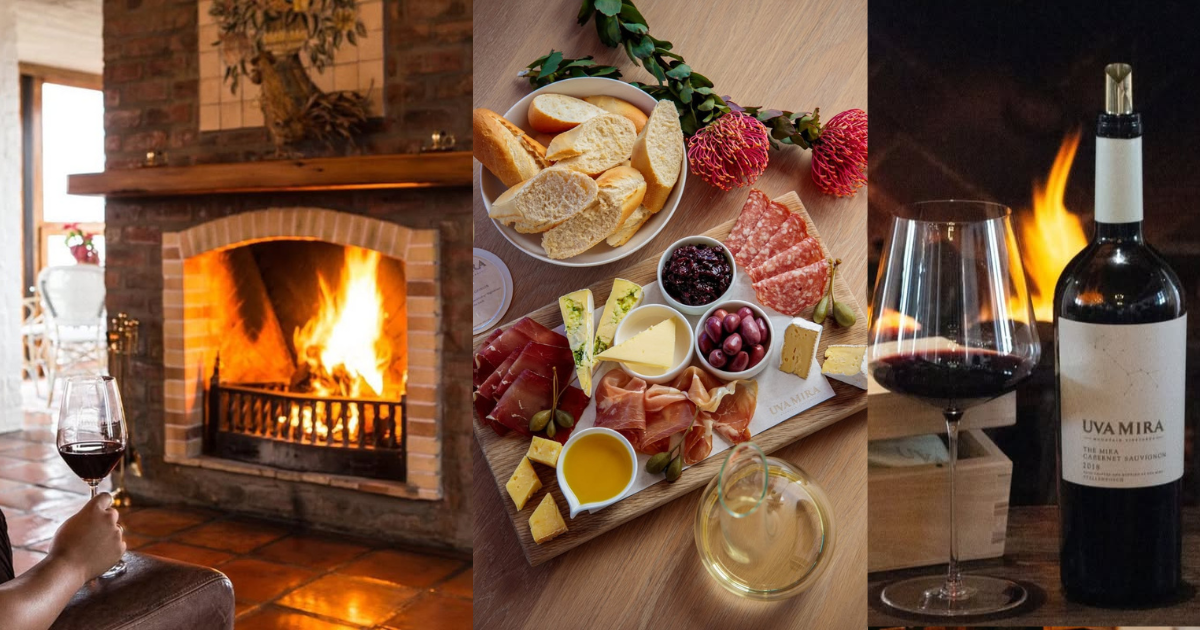
The boutique tasting room takes its design cues from Rustic Wine Country style with Mediterranean and Traditional European touches, built around comfort and warmth. High gloss terracotta tile flooring grounds the room in an earthy, organic feel, while a massive, dual-sided fireplace with exposed red and brown brick brings rugged texture and a sense of permanence to the centre of the space. A thick, rough sawn wooden mantelpiece softens the brick with a farmhouse touch, and floor to ceiling glass windows draw in natural light along with the surrounding mountain views, blurring the line between indoors and out.
The overall effect is one of relaxed luxury: a space designed for slowing down and lingering over conversation, which makes it especially well-suited to a cloudy, rain streaked morning.
 Images: @uvamiravineyard on Instagram
Ernie Els Wines: A Warm Welcome with Mountain Views
At Ernie Els Wines, every visit begins with a complimentary welcome pour, echoing the hospitality of being invited into someone's home before settling in for an educated tasting presentation. The tasting room extends out onto a wide terrace with views over the Stellenbosch and Helderberg mountains, though the indoor space is the natural choice when the weather is uncooperative.
The room blends Modern Farmhouse style with Rustic Contemporary and Industrial Chic elements, the kind of space that feels equally at home on a sunny afternoon or a grey one. Vaulted ceilings with exposed timber trusses give the space an airy, barn like quality without losing its upscale feel, while a warm, organic colour palette runs through exposed red brick, polished hardwood floors, and supple leather furnishings. Floor to ceiling glass walls open onto the vineyards, bringing the landscape indoors, and vintage style glass demijohns alongside potted succulents add agricultural character without ever cluttering the view.
Visitors who would like to linger longer can settle into the on site library with a glass of wine and a book, a fitting way to pass a slow, rainy morning in the Winelands.
.png?width=1200&height=630&name=Uva%20Mira%20Wines%20(2).png) Images:@ernieelswines on Instagram
Images:@ernieelswines on Instagram
Make a Weekend of It
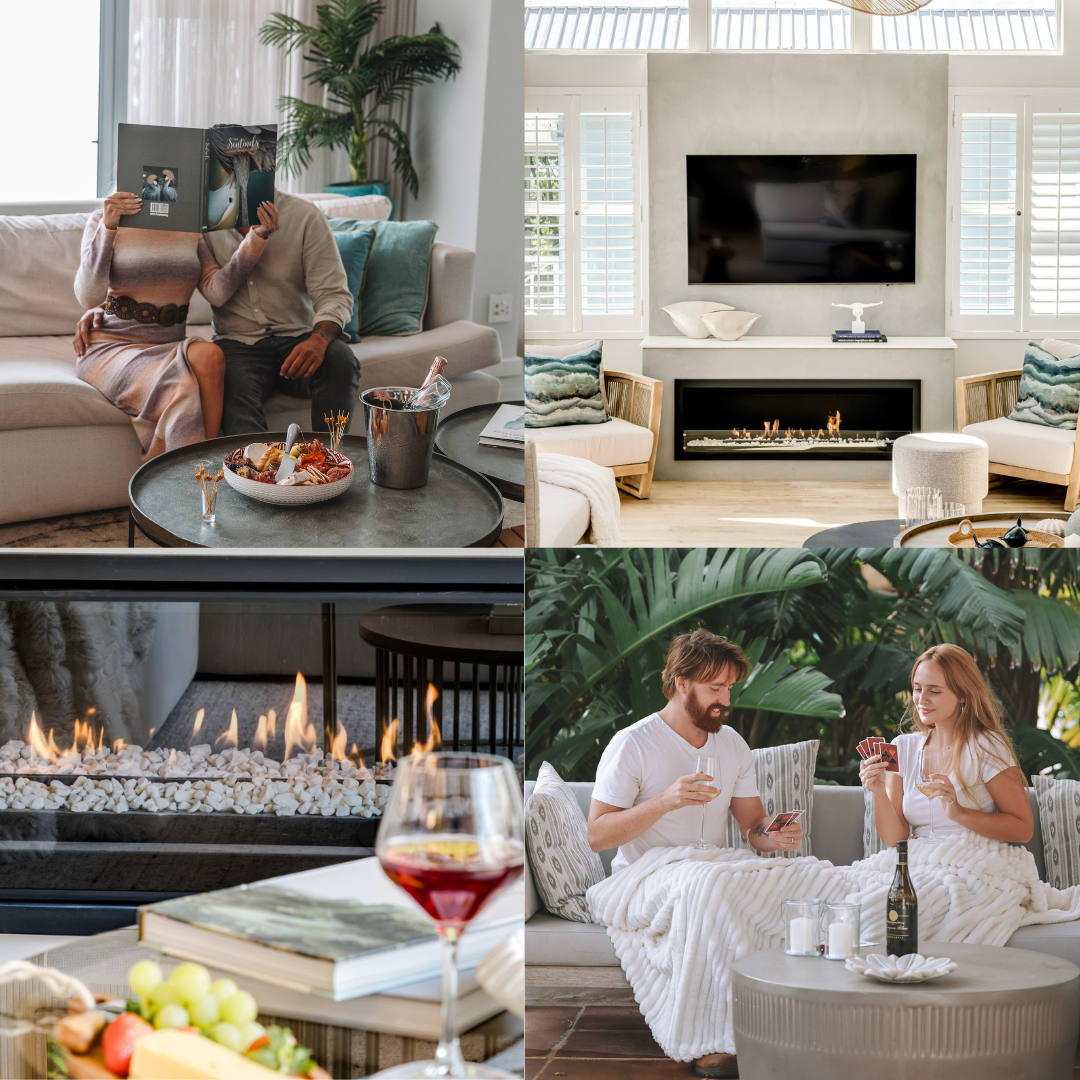
Exploring the Cape Winelands is one of many ways to make the most of time in and around Cape Town, and pairing a rainy morning tasting with comfortable, well-located accommodation makes the experience even easier to enjoy. For all holiday rental needs in Cape Town, from self-catering apartments to private villas, Nox Cape Town offers a range of properties suited to every kind of stay.
Frequently Asked Questions
Which Cape Town area has the most wine farms suited to rainy weather tastings?
The Durbanville Wine Valley, Stellenbosch, and Constantia all offer indoor tasting venues with cellars, fireplaces, or themed rooms that work well regardless of the weather. Estates such as Klein Roosboom, Maastricht, Delheim, and Buitenverwachting are good examples within these regions.
Do these wine farms require advance bookings for tastings?
Booking policies vary by estate, and they can also change seasonally, so it is worth checking directly with each wine farm or its website before planning a visit, particularly during the busier months.
Are these tasting venues suitable for families or larger groups?
Many of the venues mentioned, including Klein Roosboom's caves and Kanu's cellar booths, are designed with smaller, intimate groups in mind, while others such as Buitenverwachting and Ernie Els Wines offer more open seating that can accommodate larger parties. It is best to confirm group size requirements with the estate ahead of time.
Is food available alongside the wine tastings?
Most of the estates featured offer some form of food pairing, ranging from cheese platters and bitterballen at Maastricht to charcuterie at Buitenverwachting and bespoke cupcakes at Delheim. Availability can vary, so checking ahead is recommended.
How far are these wine farms from central Cape Town?
Distances vary depending on the wine region. Durbanville estates such as Klein Roosboom and Maastricht sit closest to the city centre, while Stellenbosch, the Helderberg, and Constantia are a little further out, each forming part of the wider Cape Winelands.
What makes a wine farm tasting room feel cosy in winter?
Features such as underground or below ground settings, fireplaces, warm lighting, and natural materials like wood, brick, and leather all contribute to a cosy atmosphere, which is why several of the venues above lean on these design elements.